
Termite damage reduces your home’s market value by 20-30% and triggers mandatory disclosure requirements in most states. You’ll face treatment costs ranging from $1,000-$3,000 plus structural repairs spanning $300-$25,000 depending on severity. Homeowner’s insurance won’t cover damage since it’s considered preventable maintenance. Active infestations create deeper buyer discounts and extended listing periods. Professional inspection documentation becomes critical for compliance and establishing realistic repair estimates during negotiations. Strategic preparation can help minimize these financial impacts.
How Termite Damage Affects Your Home’s Market Value
When termite damage infiltrates your property’s structural framework, it triggers an immediate devaluation that typically reduces market worth by 20-30% across most residential markets.
Your home’s compromised structural integrity creates negative market perception, signaling potential safety hazards to discerning buyers who’ll demand significant price concessions. Active infestations can lead to even deeper discounts as buyers remain wary of future repair needs.
Professional appraisers implement mandatory appraisal adjustments when they document active infestations or historical damage patterns throughout your property’s load-bearing components.
You’ll face extended listing periods as buyers actively avoid compromised structures, reducing competitive bidding scenarios that normally drive peak sale prices.
Regional high-risk zones amplify these valuation impacts, affecting entire neighborhoods where termite prevalence creates systematic devaluation patterns.
Your property’s marketability depends on transparent damage disclosure, professional treatment documentation, and structural repairs that restore buyer confidence in your home’s long-term stability and investment potential. The hidden damage aspect makes termite infestations particularly devastating since they can persist undetected for years while continuously compromising your home’s foundation and framework.
Treatment Costs and Repair Expenses You’ll Face
Before you can determine your property’s true market position, you’ll need to calculate the all-encompassing financial impact of termite remediation and structural restoration.
| Damage Category | Treatment Cost | Repair Range |
|---|---|---|
| Prevention/Inspection | $300-$800 | $0 |
| Minor Cosmetic | $1,000-$3,000 | $300-$2,000 |
| Moderate Structural | $1,000-$3,000 | $2,000-$5,000 |
| Major Structural | $1,000-$3,000 | $5,000-$25,000 |
| Foundation Damage | $1,000-$3,000 | Up to $25,000 |
Early detection through professional inspections costs markedly less than post-infestation repairs. Annual preventive treatments represent less than 10% of minor damage expenses, while extensive structural restoration can reach $25,000 for foundation remediation. You’re facing potential combined costs that’ll directly impact your selling position and negotiation leverage. Understanding your obligations as a seller regarding seller liability is crucial in navigating these expenses.
Beyond immediate repair expenses, termite history can continue affecting your property’s marketability even after successful treatment and restoration.
Insurance Coverage and Legal Disclosure Requirements

Although your homeowner’s insurance policy covers sudden disasters like fires and storms, it won’t protect you against termite damage costs that can derail your sale. Standard policies classify termite infestations as preventable maintenance issues, placing responsibility squarely on your shoulders. These insurance exclusions mean you’ll handle repair costs independently.
You’re legally bound to include termite problems in your seller disclosures. Concealing known infestations exposes you to post-sale litigation and financial penalties that exceed initial repair costs. Documentation from pest inspectors becomes critical evidence of your compliance with disclosure requirements.
Consider termite bonds as alternative protection, offering inspection, treatment, and repair coverage that standard policies exclude. These warranties address gaps in homeowner’s insurance while demonstrating proactive pest management to potential buyers. Termites feed on cellulose in wood, making any wooden structures in your home vulnerable to extensive damage over time.
Timeline Factors That Impact Damage Severity
Termite damage severity escalates dramatically based on species type, with Formosan subterranean termites posing the greatest threat to your property’s structural integrity.
These aggressive colonies containing millions of individuals can consume several feet of wood within one week.
Colony growth accelerates exponentially over years, with mature colonies producing visible surface damage indicators while early-stage infestations persist undetected behind walls.
Moisture migration around foundations creates prime conditions for rapid colony expansion.
Poor drainage, clogged gutters, and wood-to-ground contact compound infestation severity.
Multiple colonies feeding simultaneously cause tenfold damage acceleration compared to single infestations.
Previously untreated structures face catastrophic timeline compression—floors can sag and wooden beams weaken within months.
You’re facing potential structural collapse if intervention doesn’t occur promptly. Regular inspections help identify the progression from minor surface indicators to catastrophic structural compromise.
Negotiation Strategies for Sellers and Buyers

Understanding termite damage severity sets the foundation for strategic negotiations that can make or break your sale. You’ll need precise documentation and clear pricing transparency to navigate these discussions effectively.
Your negotiation arsenal should include:
- Official termite inspection reports – Use these as irrefutable evidence for damage scope and repair costs
- Multiple contractor bids – Establish realistic repair estimates that support your negotiating position
- Contingency clauses – Structure agreements addressing future termite responsibilities and warranty coverage
- Pre-listing treatments – Complete repairs upfront to command higher prices and avoid escrow delays
Whether you’re selling as-is with price reductions or investing in repairs for premium pricing, your success depends on transparent communication and proper risk assessment. Cash buyers often accept damaged properties at discounted rates, while traditional buyers require thorough clearance documentation.
Termite-Damaged Home Solution Process
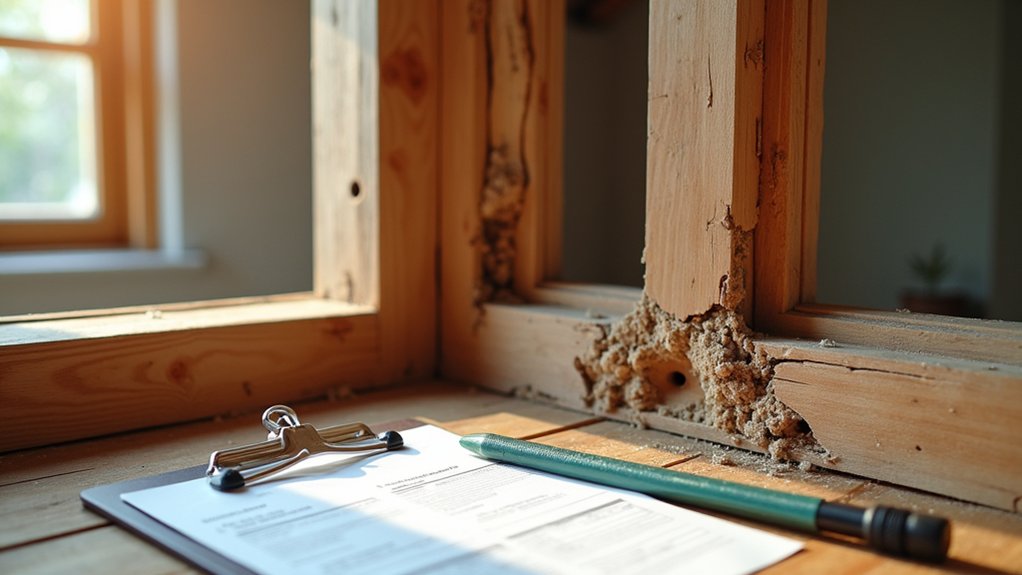
When you’re dealing with termite damage that compromises your home’s marketability, you’ll need to provide thorough property details including inspection reports, treatment documentation, and structural assessments through our streamlined submission process.
We’ll evaluate your property’s condition against current building codes and safety standards to generate a fair cash offer that accounts for remediation costs and market risks.
You’ll then select a closing timeline that aligns with your disclosure requirements and allows proper documentation transfer to complete the transaction.
Tell Us About Your Property
Breaking down your property’s termite situation requires systematic documentation and strategic assessment before you can determine the most effective solution path.
You’ll need thorough data to evaluate whether repairs or as-is sales align with current neighborhood trends and your property’s accessibility features.
Document these critical elements:
- Damage extent and structural impact – Obtain professional inspection reports detailing foundation compromise and wood destruction levels
- Treatment history and current activity – Compile records of previous treatments, warranties, and ongoing infestation evidence
- Repair cost estimates – Secure detailed quotes for fumigation, structural remediation, and compliance upgrades
- Market positioning factors – Assess your timeline, financial capacity, and buyer pool preferences for damaged properties
This documentation framework enables informed decision-making and supports transparent negotiations with potential buyers or investors.
– You submit your information through a simple form or a quick phone call
Once you’ve compiled your termite damage documentation, contacting a cash buyer requires minimal effort through streamlined submission channels. You’ll choose between direct phone communication or digital form submission, both designed for quick contact without bureaucratic delays. Phone calls connect you immediately with representatives who assess your situation in real-time, while online forms accommodate your schedule preferences with privacy assurances protecting your property information.
The submission process captures essential details: property address for service area verification, damage descriptions for preliminary assessment, and contact information for follow-up coordination. You’ll provide ownership verification and timeline expectations, enabling representatives to schedule appropriate evaluations. Multiple contact methods eliminate accessibility barriers, ensuring you can initiate the cash sale process regardless of your communication preferences or immediate availability constraints.
Get a Fair Cash Offer
Multiple assessment protocols enable cash buyers to deliver accurate valuations that account for termite-induced structural compromises and associated remediation costs.
You’ll receive pricing transparency through documented evaluation methodologies that consider current market conditions, damage severity, and repair timelines.
Cash buyers determine fair offers through these key factors:
- Structural integrity assessment – evaluating load-bearing compromises and foundation stability
- Remediation cost calculations – quantifying extermination, replacement, and preventive treatment expenses
- Market value analysis – comparing similar properties and recent sales data
- Documentation review – analyzing inspection reports, treatment records, and warranty coverage
You’re free from traditional financing constraints that often derail sales involving compromised properties.
Cash buyers present firm offers within 24 hours, eliminating uncertainty while factoring all termite-related liabilities into transparent pricing structures.
– We’ll quickly assess your property and present a no-obligation cash offer
Professional property assessments begin immediately upon your contact, using advanced diagnostic equipment and systematic evaluation protocols to determine termite damage severity across all structural elements.
Our certified inspectors deploy thermal imaging, moisture meters, and specialized probes to identify hidden infestations throughout your foundation, crawl spaces, and structural framework.
Post inspection documentation includes exhaustive damage mapping, structural integrity analysis, and treatment requirement specifications.
You’ll receive detailed photographic evidence and precise repair cost calculations within 48 hours. Our assessment considers current market timing factors, ensuring your cash offer reflects real property values despite termite complications.
We eliminate traditional sale delays by providing immediate, no-obligation offers based on professional damage evaluations.
You’re free from lengthy repair processes, contractor negotiations, and disclosure complications that typically plague conventional sales.
Choose Your Closing Date
Within seven days of accepting your offer, you’ll select your preferred closing date based on your termite-damaged property‘s specific circumstances and sale structure.
Your closing flexibility depends on four critical factors:
- Inspection validity periods – Most termite reports expire within 30-90 days, requiring escrow coordination to prevent re-inspection delays
- Treatment timelines – Fumigation adds 2.5 days minimum, plus scheduling and preparation time
- Repair negotiations – Multiple contractor bids and damage assessments can extend escrow by weeks
- Lender requirements – Traditional financing demands clearance certificates before fund release
Cash buyers eliminate these constraints entirely.
You’ll avoid lender-mandated inspections, treatment requirements, and repair negotiations.
This escrow coordination advantage lets you close within seven days of agreement, bypassing typical termite-related delays that plague conventional sales.
– If you accept, you pick the date that works best for you, and we handle the paperwork
Once you accept our offer, you’ll select your preferred closing date while we manage all required documentation and compliance procedures. You’re not constrained by traditional market timelines or buyer financing contingencies that typically complicate termite-damaged property sales.
When you pick date preferences, we’ll coordinate termite clearance certificates, inspection reports, and treatment documentation to guarantee FTC compliance requirements are met. You won’t handle paperwork complexities involving state-specific disclosure forms or certification verification processes.
Our streamlined approach eliminates documentation burdens while maintaining legal compliance standards. You’ll avoid typical delays from structural assessment requirements, repair verification procedures, and buyer protection negotiations. This flexibility allows you to plan your handover timeline according to your specific circumstances rather than external market constraints or bureaucratic processing delays.
Final Thoughts
You’ll find termite damage operates like a ticking time bomb in real estate transactions, requiring surgical precision in damage assessment and compliance with disclosure protocols. Don’t let this silent destroyer erode your negotiating foundation—conduct thorough inspections, quantify structural compromises, and calculate remediation costs against market variables. Your due diligence becomes the firewall between catastrophic loss and strategic recovery. Navigate these treacherous waters with professional expertise, ensuring regulatory compliance while mitigating financial exposure through systematic risk evaluation.
References
- https://www.hitechtermite.com/articles/termites-vs-your-home-the-alarming-stats-that-should-scare-you
- https://americanpest.net/blog/the-real-facts-about-termite-damage/
- https://ridabuginc.com/blog/how-termite-damage-impacts-your-home-s-resale-value
- https://www.accelpest.com/blog/do-termites-decrease-the-value-of-your-home/
- https://allpests.com.au/what-are-the-long-term-effects-of-termite-infestations-on-property-value/
- https://www.fastexpert.com/blog/should-i-buy-a-house-with-termites/
- https://www.orkin.com/pests/termites/termite-statistics
- https://thrasherpestcontrol.com/how-pest-issues-affect-real-estate/
- https://www.localbiznetwork.com/articles/economic-impact-of-termite-infestations-a-statistical-overview
- https://www.hitechtermite.com/articles/economic-impact-of-termite-infestations-a-statistical-overview